Video
14.05.2026
This video is not meant to attract followers, but professionals.



If you take your work seriously in this industry, you know it.
Social media is full of content that gets views… but builds no real expertise.
Videos created to grab attention, not to truly explain how things work.
And the result is only one: confusion.
How many times have you seen demonstrations that, in reality, mean nothing?
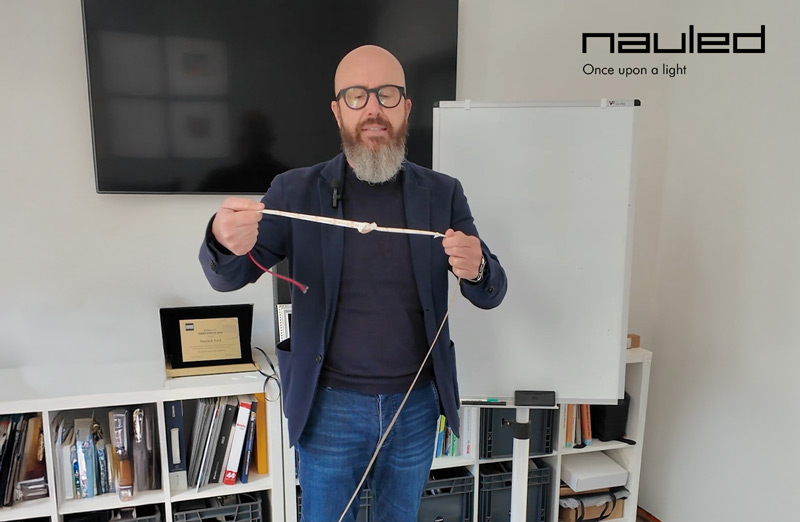
Classic example: a LED strip bent, turned on, and shown as proof of resistance.
It looks impressive. But what does it actually prove?
Nothing.
That’s not how a LED strip is used. That’s not how a product is tested. That’s not how professionals work.
A LED strip lighting up while being bent does not prove quality. It simply shows that:
the pads are not short-circuiting
the circuit, at that moment, is holding
That’s it.
There is no thermal analysis, no real-world condition testing, no durability testing, and most importantly, no application context.
If you use this kind of content as a reference, you risk making technical decisions based on misleading demonstrations.
And in our industry, this has consequences:
- installation errors
- long-term issues
- loss of credibility in front of the client
Real professionals don’t show “tricks.”
They show:
- how to correctly install a product
- how to analyze an application
- what the real limits are
Because a product is not judged by a viral video. It’s judged by how it performs in its real context.
This content is not for everyone
If you're looking for entertainment, this is not for you.
But if you really want to understand how to use LED strips in a professional way, then yes.
▼ Watch the video
If you want to learn how LED strips should really be installed and used -> book a call with us
Because the difference is not made by those who get the most views. It’s made by those who work better.