11.09.2026
Nauled for Sports: The Circuit Through the Eyes of Ale Moto Corse Riders



11.02.2026
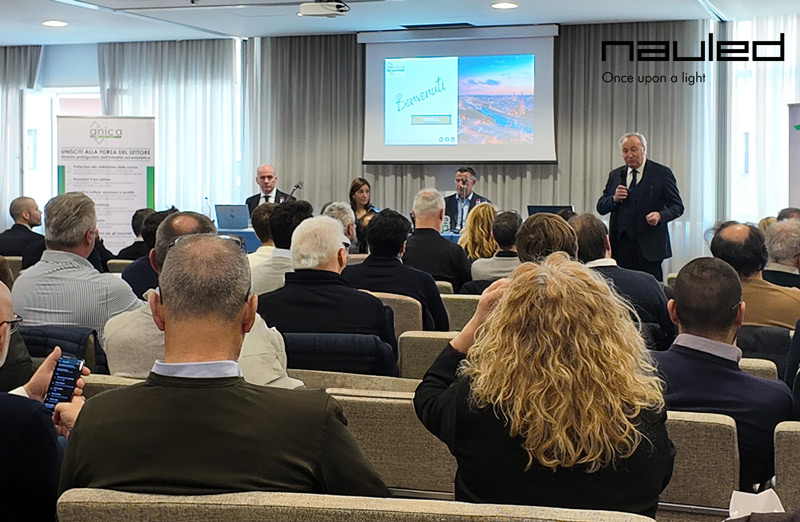
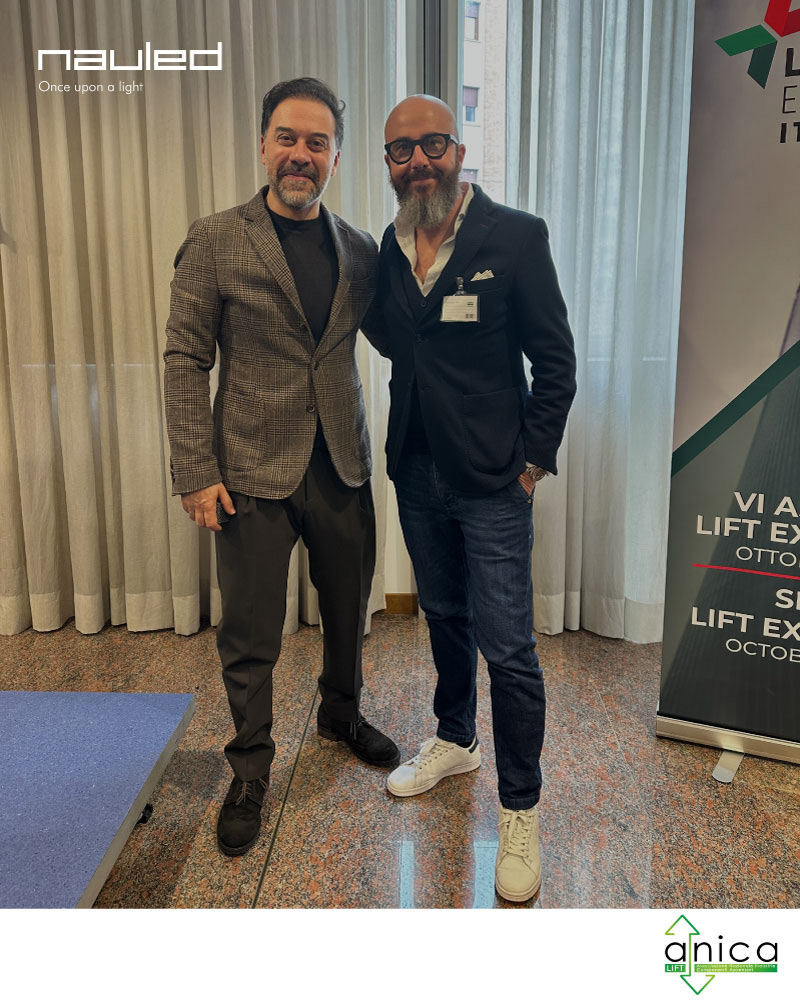
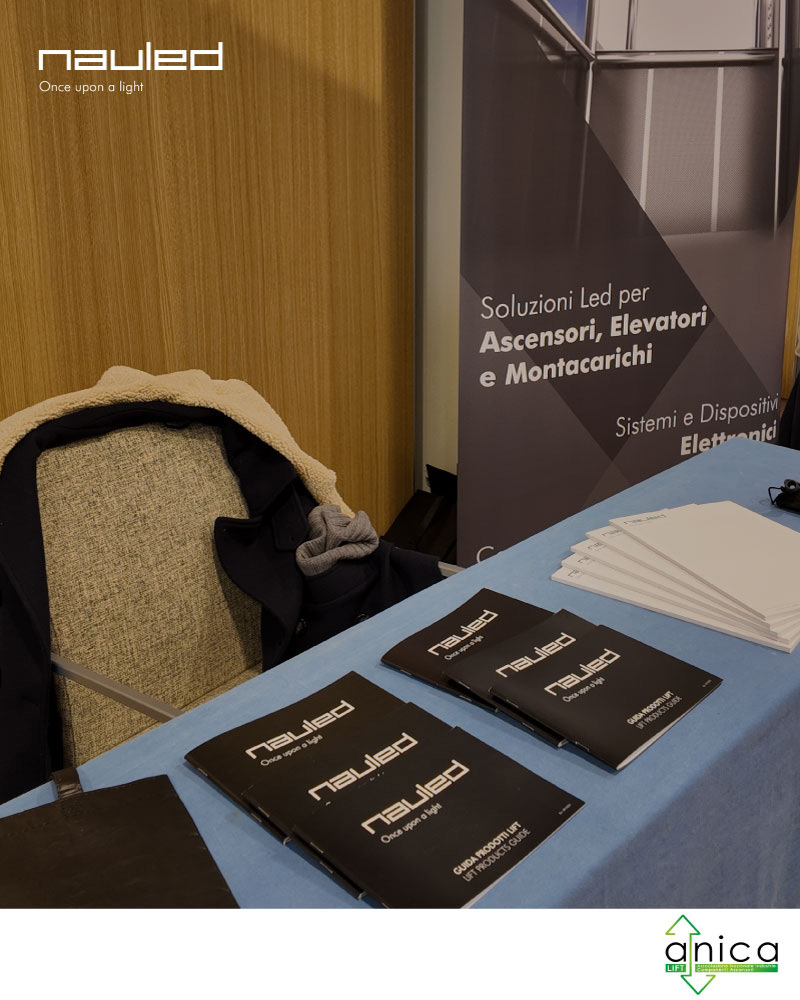
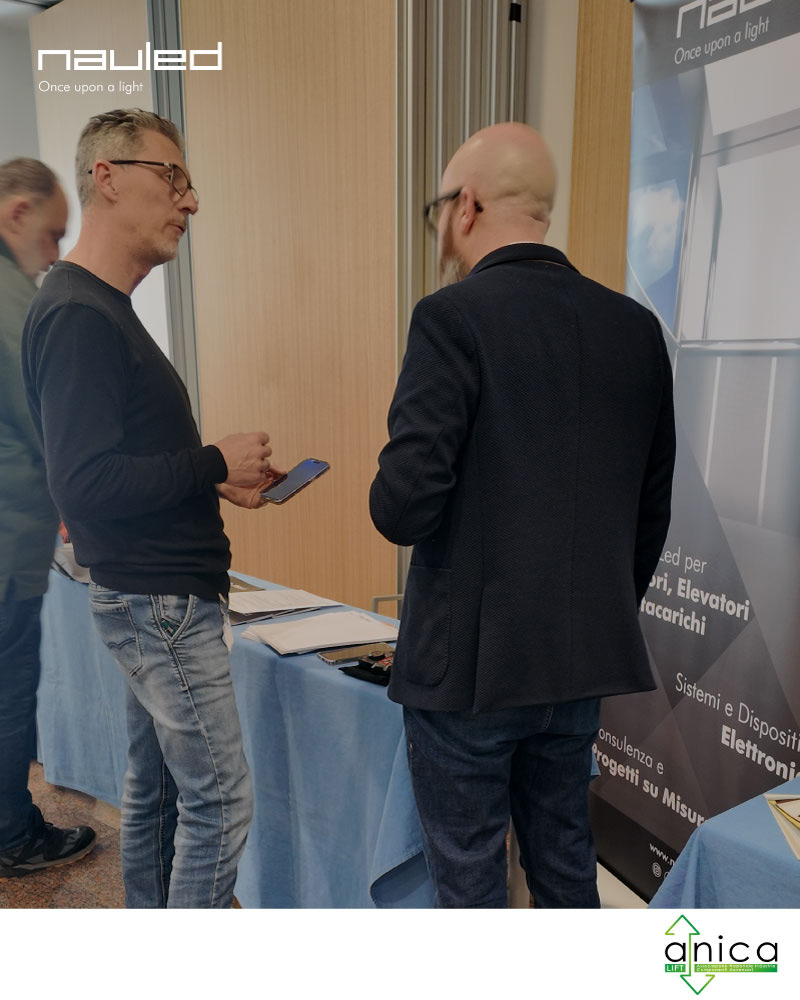
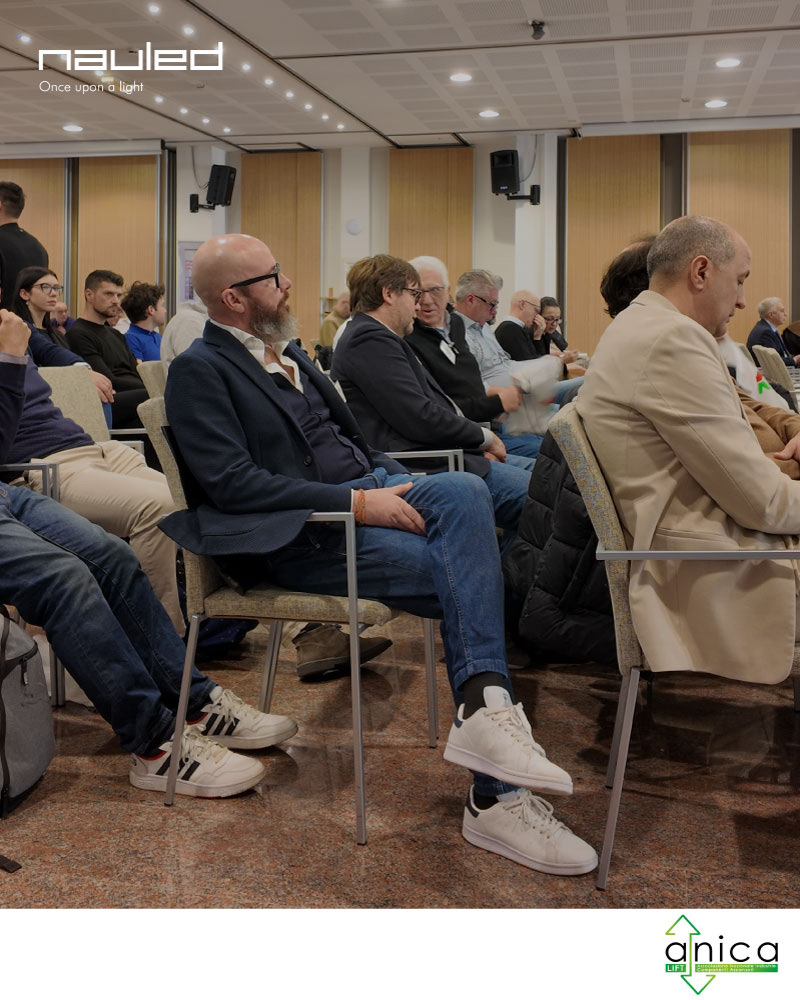
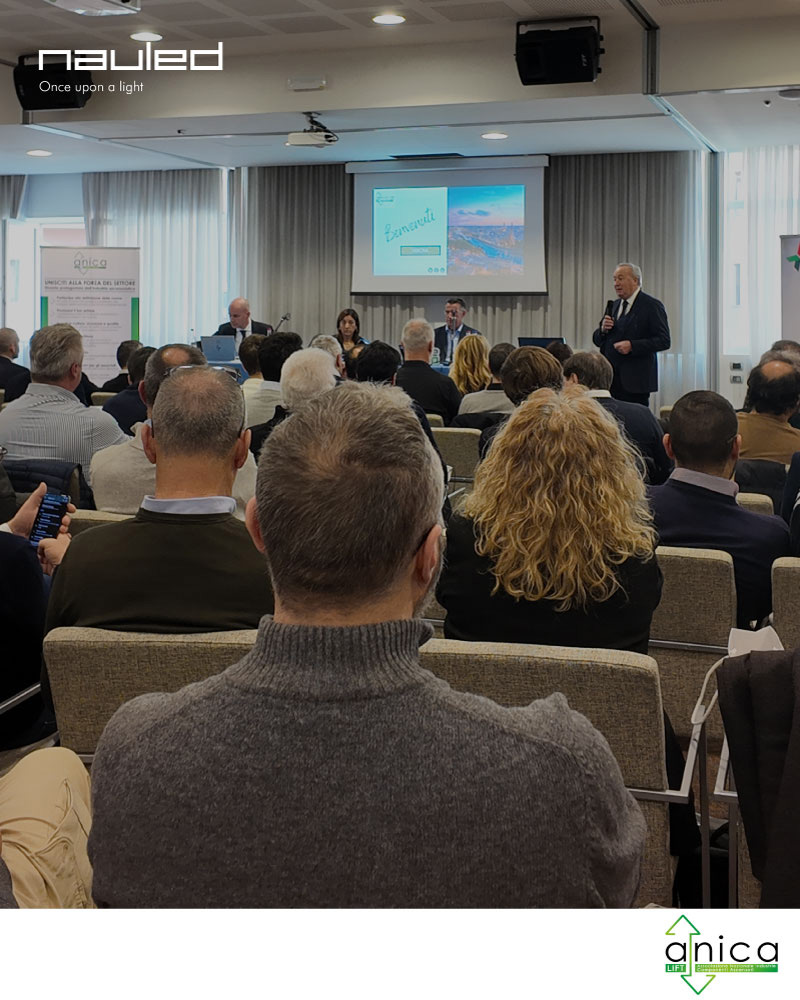
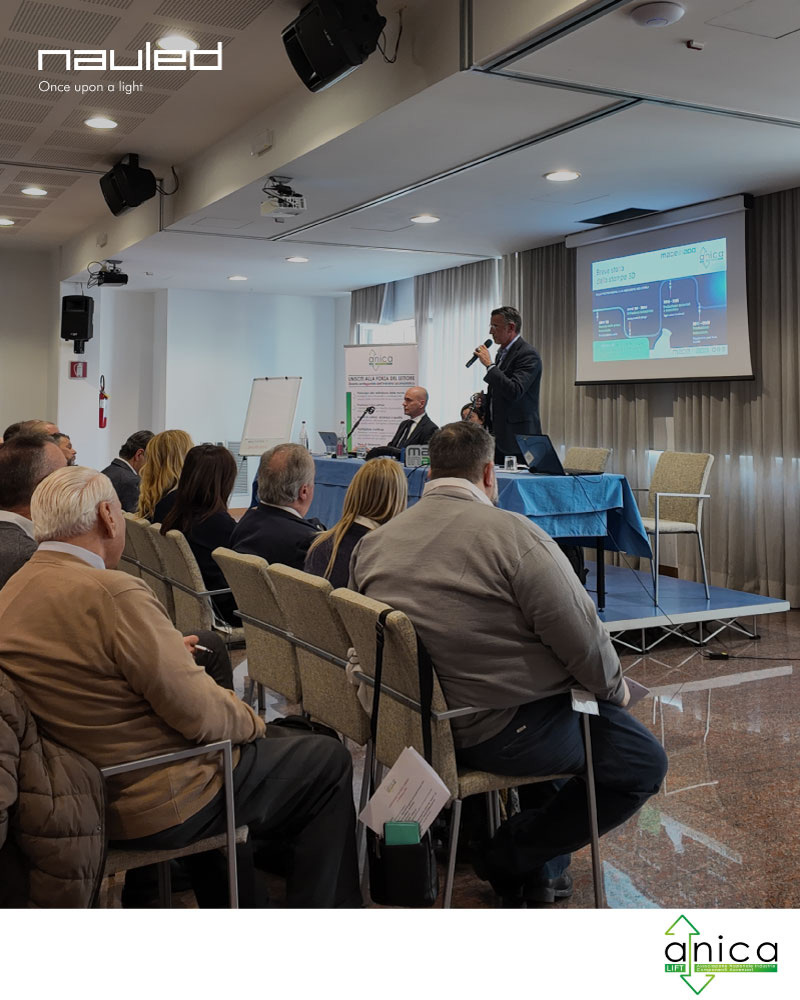
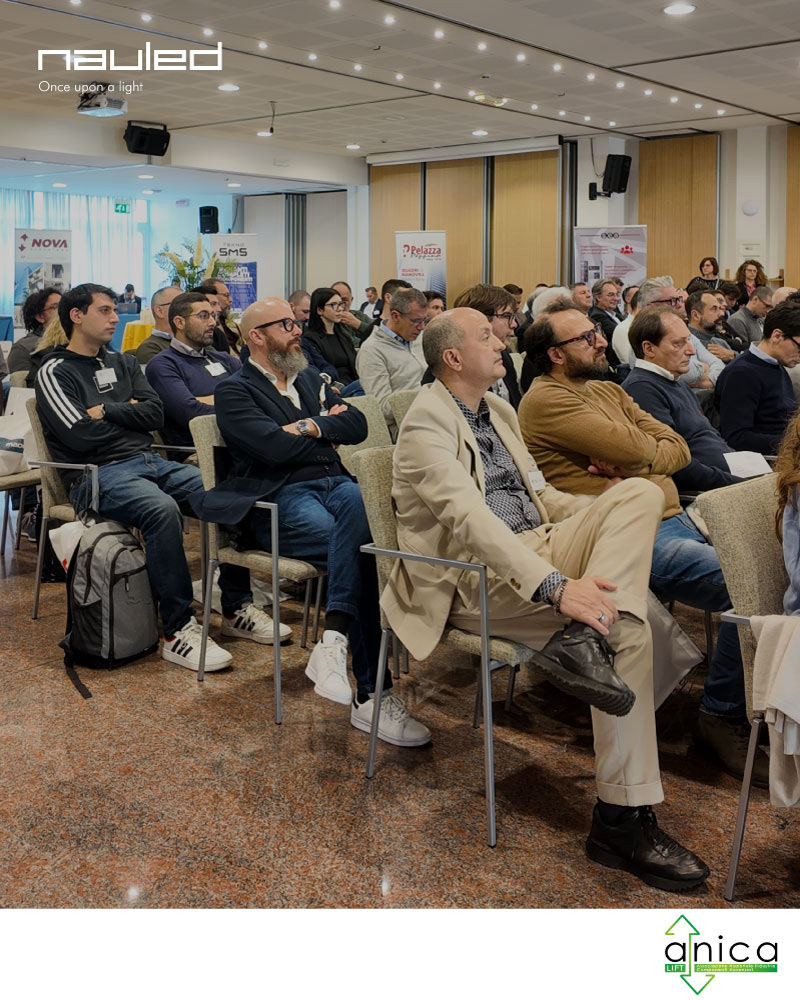
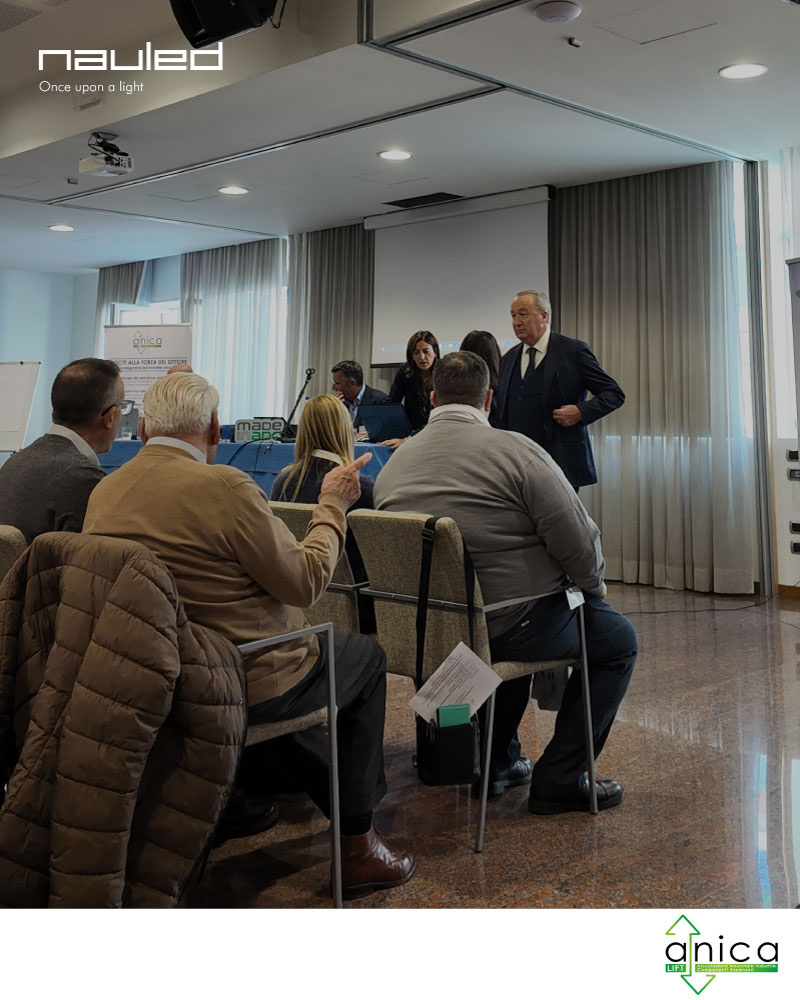
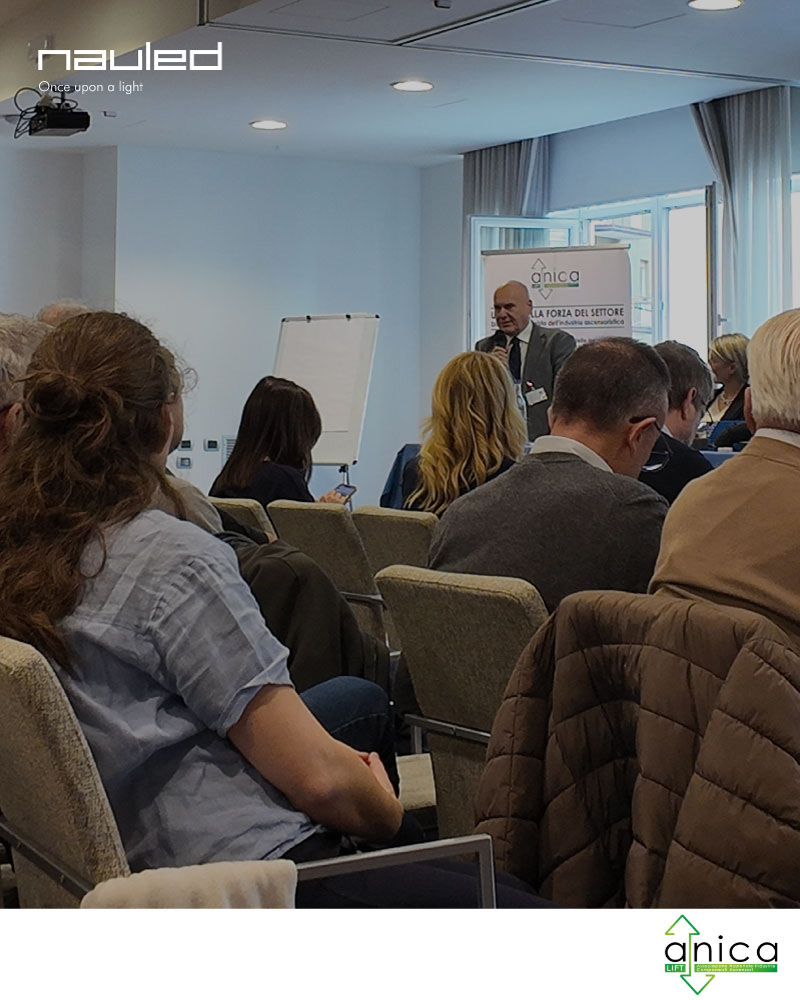
On February 10, 2026, we took part in the ANICA Technical Seminar in Verona, an event that has now become a key reference point for companies, professionals, and technicians in the elevator industry.
It was a day full of updates, innovation, and regulatory insights, during which — as sponsors — we also contributed with the topic closest to our core expertise: lighting in elevator systems.
In this article, we want to share highlights from the day, the most relevant presentations, and the key concepts of our own speech.
The ANICA Seminar in Verona offered a comprehensive overview of the technological and regulatory changes reshaping the world of elevators.
Technology and Innovation: 3D Printing and AI for the Elevator Industry
The morning opened with a presentation by Dr. Andrea Gorlezza (MadeInAdd), who illustrated the potential of 3D printing in the elevator sector — from rapid prototyping to the production of customized components, as well as applications in maintenance and retrofit projects.
This was followed by Eng. Daniele Rocca (Wittur Spa), who presented Matchdoor, an artificial intelligence application for door modernization, showing how AI technologies can improve performance, safety, and intervention times. Together, these talks confirmed a clear trend: the elevator industry is fully entering the era of automation and intelligent manufacturing.
The program continued with Eng. Giorgia Feneri (Sic srl, President of UNION), who provided an in-depth overview of the Machinery Regulation 2027, set to come into force next year.
This topic is of major importance for all industry professionals, as the new regulation will impact:
- the responsibilities of manufacturers and maintenance companies,
- technical documentation,
- safety requirements,
- risk management.
A crucial update to help the industry prepare effectively for the changes ahead.
Eng. Giuseppe Andreani (ANICA) then compared DM 236 and EN 81-70, clarifying differences and regulatory criticalities related to accessibility. This session was particularly useful for understanding how to design elevator systems that are truly accessible and compliant.
To conclude, Eng. Antonio Lizza (ANICA) delivered a practical focus on ISO 8100, explaining what actually changes for those working daily on elevator systems: inspections, procedures, technical aspects, and key points of attention.
As official sponsors, we delivered a 5-minute speech, during which Gianluca Panzeri — founder of Nauled — explained in a direct and concrete way why lighting in elevators is never a detail.
Our three slides summarized three key messages.
1. The Right Light for Manufacturers and Specialized Technicians
Every elevator cabin has unique materials, finishes, colors, and geometries.
For this reason, lighting cannot be universal.
Drawing on over 15 years of experience, we shared a simple but essential truth: manufacturers and technicians do not need “just a light that turns on,” but lighting designed specifically for the real system, taking into account:
- color rendering,
- color temperature,
- light distribution,
- environmental perception.
Poor lighting can completely change the appearance of a cabin — even when it is new and carefully designed.
2. If a Cabin Is Unappealing, the Light Might Be the Reason
We shared a practical example that explains the industry better than a thousand words.
Before the advent of LED technology, studies showed that 30% of service calls were due to burned-out bulbs.
Even today, when a light turns off, for the “typical Mrs. Maria,” “the elevator is broken.”
This is because lighting:
- defines the perception of safety,
- creates the three-dimensional feel of the space,
- influences aesthetics more than any finish.
Incorrect lighting can ruin a beautiful cabin.
Correct lighting can fully enhance it.
3. Not Just What Is Required, but What Technicians Truly Need
Nauled does not provide only “what is required by regulations,” but what really helps technicians in their daily work:
- reliable products,
- guidance in choosing the right solution,
- systems designed for real-world operations,
- concrete support to reduce errors, service calls, and unnecessary interventions.
The professionalism of an elevator technician is also reflected in lighting.
Lighting that does not glare, does not create shadows, and does not generate insecurity.
Lighting designed to work at all times, even in critical situations such as a blackout.
That is where we come in.
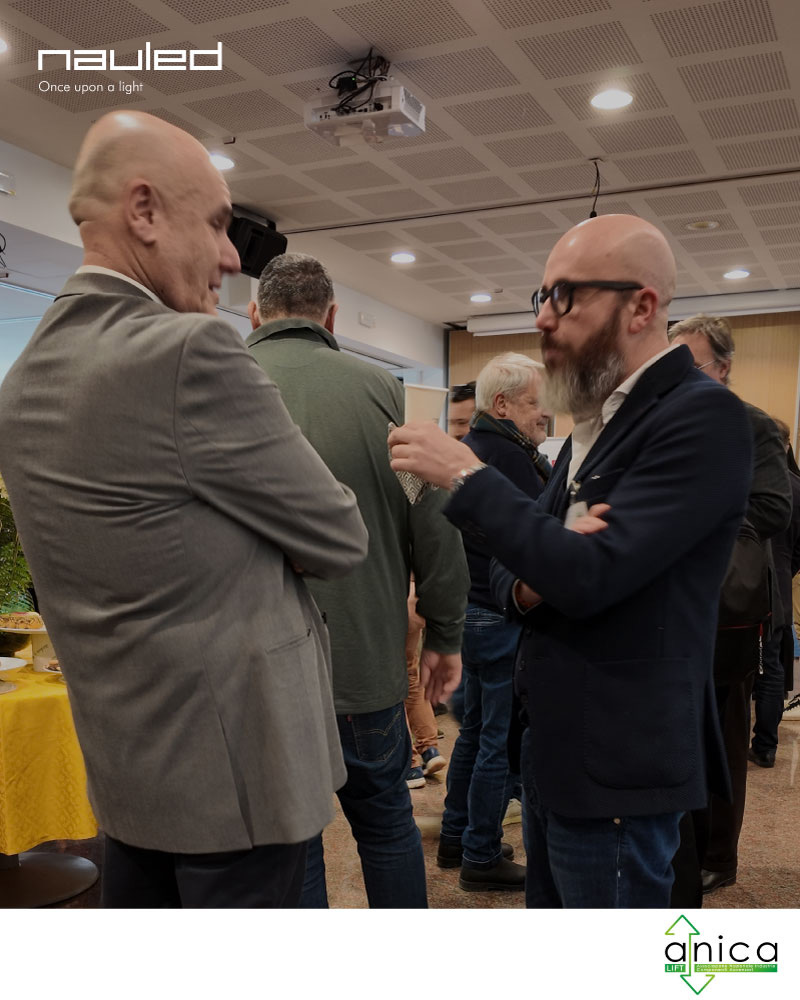
The ANICA Technical Seminar Verona 2026 was a valuable opportunity to exchange ideas with technicians, companies, and manufacturers, listen to real needs, and share our vision.
We saw an industry that is evolving, innovating, and preparing for new regulations — an industry in which lighting is still often underestimated, yet in reality represents a key factor for:
- safety,
- aesthetics,
- environmental perception,
- system reliability,
- end-user satisfaction.
For this reason, we will continue to bring our experience, research, and passion to every context where elevators are discussed.
Because when lighting is well designed, it truly makes the difference.
<