11.09.2026
Nauled for Sports: The Circuit Through the Eyes of Ale Moto Corse Riders



“CE certified” means nothing if you don’t know what’s behind it
In lighting, you often hear this phrase:
“Don’t worry, it’s CE certified.”
Those who say it think the conversation is over. In reality, that’s where it should begin.
Because CE certification is not a sticker.
It’s not a document you attach.
It’s a process.
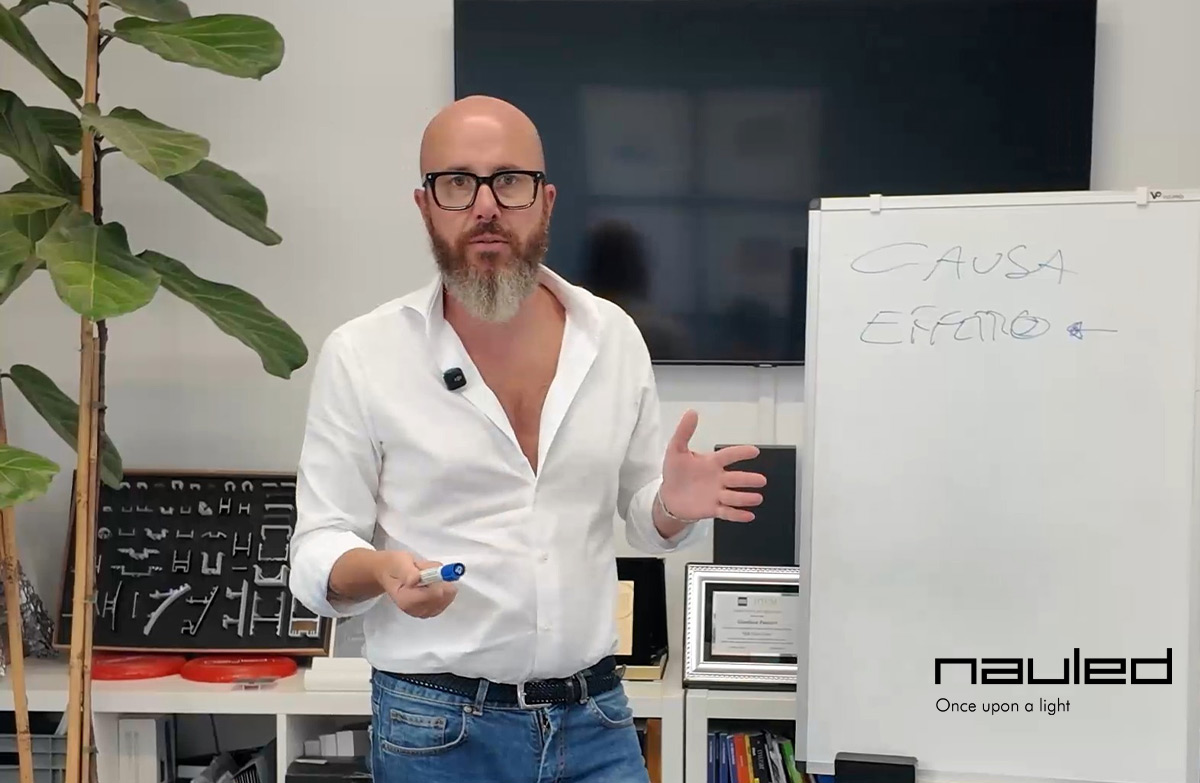
During the interview with Marco Oleandri from Milab, one thing became clear.
Most companies do not fully understand what “CE marking” really means.
They believe it’s enough to fill out a document, mention a few standards, and make a self-declaration.
That’s it. No.
The law is much clearer than that.
To declare a product compliant, you must prove it.
And proving it means:
- performing real tests
- obtaining verifiable reports
- complying with specific standards
Without all this, CE certification is just paper.
Talking about CE in lighting means dealing with multiple levels.
There is electrical safety.
There is electromagnetic compatibility.
There is photobiology.
There is thermal management.
And every product must comply with all of them together.
Not just one.
This is one of the most widespread misconceptions.
“I use certified components, so the product is certified.”
False.
Because once assembled:
- temperatures change
- interactions change
- behaviors change
And if you don’t test the complete system, you don’t know what will really happen.
One of the most critical points that emerged during the interview is power supply.
Even today, you still see generic power supplies used instead of LED drivers.
Do they work? Yes. Are they correct? No.
Because:
- they don’t guarantee safety
- they don’t comply with standards
- they don’t have the same electromagnetic compatibility
And this is where real problems begin.
During the interview, a concrete issue emerged.
Goods blocked at customs.
Why?
- incomplete documentation
- invalid tests
- inconsistent certifications
A common mistake: trusting the manufacturer’s certificate.
If you import a product, the responsibility is yours.
You must:
- have your own CE declaration
- verify all documentation
- ensure everything is consistent
Because if something is wrong, you are responsible.
Not the supplier.
This content is not for everyone
CE certification is not a step. It’s a method.
▼ Watch the full interview
If you want to truly understand how to make your products compliant and avoid surprises → book a call with us
Because certification is not what you declare. It’s what you can prove.